
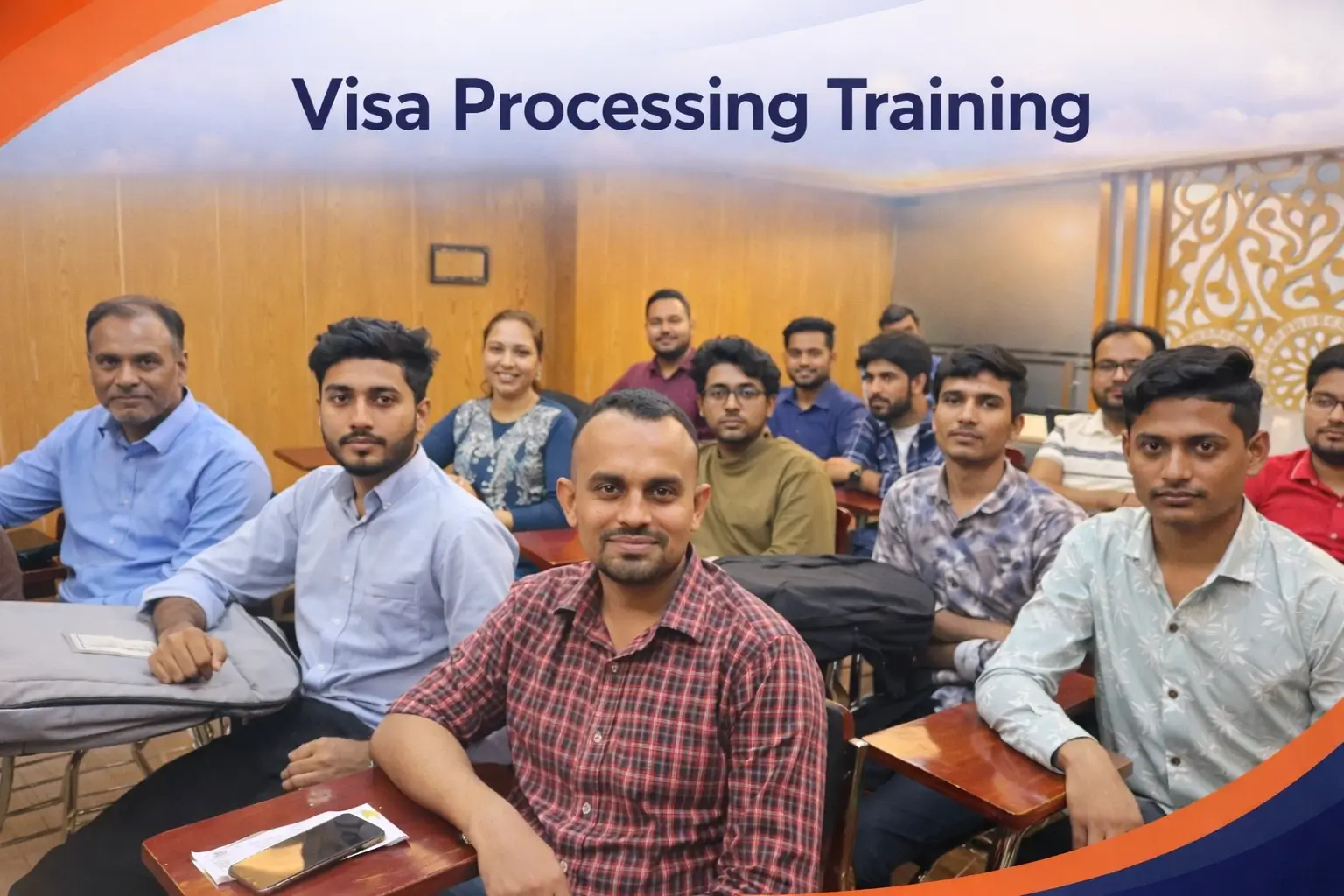
Visa Processing Course: Complete Guide for Beginners (Career & Training)
Visa processing has become one of the fastest-growing skill-based careers today. Every year, thousands of people apply for student visas, tourist visas, work permits, and medical visas. But the process is not simple, and even small mistakes can lead to rejection.
Embassies follow strict rules when evaluating applications. They check documents carefully, review financial proof, and analyze the applicant’s intention. Because of this, professional visa processors are now in high demand.
If you are planning to build a career in this field, joining a visa processing course can be the first step. It helps you understand how the system works and how to handle applications properly.
This is not just about filling forms—it is about understanding the complete process and avoiding mistakes that can affect approval.
Understanding Visa Processing in a Practical Way
Many people think visa processing is just paperwork. But in reality, it is a structured process that requires knowledge, accuracy, and proper presentation.
Each visa type has different requirements. A student visa needs academic documents, financial proof, and a strong explanation of study plans. A tourist visa focuses more on travel purpose and financial stability. Work visas require employment-related documents.
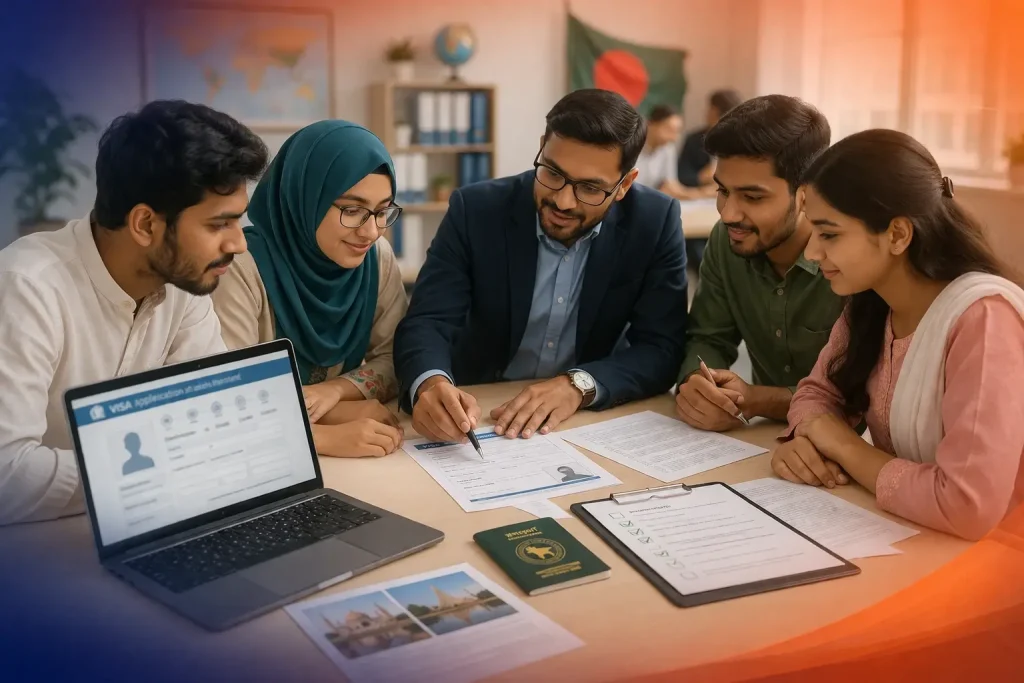
A trained person understands these differences and prepares each case accordingly.
For example, if an applicant has a study gap or inconsistent documents, a professional knows how to present the case in a better way. This is why learning through a proper visa processing training is important.
It helps you understand how real applications are handled, not just theory.
What You Learn in a Visa Processing Course
A professional visa consultancy course covers multiple areas that are essential for real work.
You start with the basics—understanding how visa systems work and how embassies evaluate applications. This gives you a strong foundation.
Then you learn document preparation. This includes organizing files, understanding financial documents, and checking sponsor details. Many applications fail due to poor documentation, so this part is very important.
You will also learn how to write cover letters and statements of purpose. These documents explain the applicant’s intention and play a major role in visa decisions.
Another important part is understanding the submission process. This includes appointment booking, file submission, and basic interview preparation where required.
A complete visa processing course prepares you to handle real cases confidently.
Student Visa Processing: A Key Career Skill
One of the most important areas in visa processing is student visa applications. Thousands of students apply abroad every year, making it one of the largest segments.
That is why most professional courses include a strong student visa processing course module.
In this section, you learn how to evaluate a student profile properly. This includes checking academic background, study gaps, and future plans.
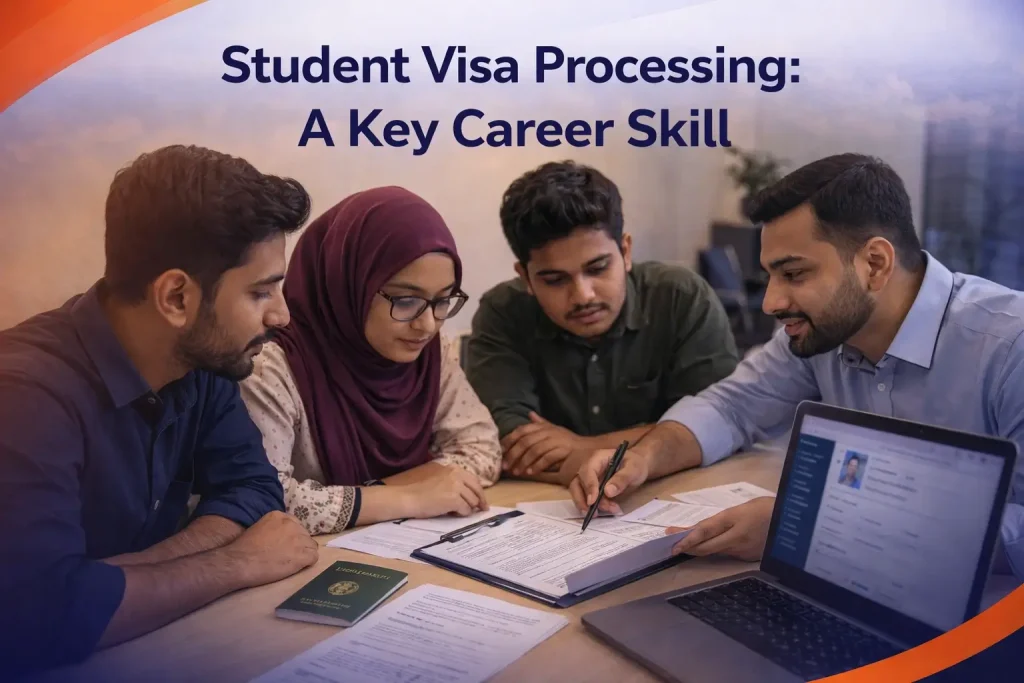
You also learn how to select suitable study options and prepare documents accordingly. Financial documentation is another important area, where many applicants face issues.
A strong SOP (Statement of Purpose) is also essential. It explains why the student wants to study abroad and how it connects to their future goals.
This part of training helps you build real confidence and makes you more valuable in the industry.
Why Practical Learning Matters More Than Theory
One of the biggest mistakes beginners make is focusing only on theory. Many people watch videos or read notes but do not practice real scenarios.
In reality, visa processing is a practical skill. You need to understand how to analyze documents, identify risks, and prepare strong applications.
For example, if a financial document is weak or unclear, you need to know how to improve the file. If a case has risk factors, you need to understand how to handle them.
These skills cannot be learned from theory alone. That is why a proper visa processing training program focuses on real-life situations.
When you practice with real examples, you become more confident and ready for actual work.
Why This Skill is Becoming More Popular
The demand for visa processing skills is increasing because global movement is increasing.
More students are going abroad for higher education. More professionals are applying for jobs in other countries. Tourism and medical travel are also growing.
All these activities require proper visa support. As a result, agencies and consultancy firms need trained professionals who can handle applications correctly.
This is why a visa processing course is becoming a popular choice for students and job seekers.
It is a skill that connects directly to real work opportunities.
Who Should Join This Course
This course is suitable for anyone who wants to build a practical career.
Students can join while continuing their studies. They can start learning early and gain experience before graduation.
Job seekers can use this as a fast way to enter the workforce. Instead of waiting for traditional opportunities, they can develop a skill that is in demand.
It is also useful for people already working in travel or consultancy sectors. They can upgrade their skills and improve their career prospects.
Entrepreneurs can also benefit from this course. If you want to start your own consultancy, this training gives you the foundation.
Even if you have no previous experience, you can start from the beginning and learn step by step.
Choosing the Right Course for Better Results
Not all courses provide the same level of training. Choosing the right course is very important.
You should look for a program that focuses on practical learning, not just theory. Real case examples, step-by-step guidance, and clear explanations are essential.
The course should help you understand real problems and how to solve them. It should also build your confidence to handle clients.
A good visa processing course prepares you for real-world situations, not just classroom knowledge.
Building a Career with the Right Skill
One of the biggest advantages of this field is that it is skill-based. You do not need a high academic background to succeed.
What matters most is your ability to understand cases, prepare documents, and guide clients properly.
With the right training, you can build a stable career in this field. You can work in agencies, consultancies, or even start your own service.
This makes visa processing a strong and practical career option.
Career Opportunities After Completing a Visa Processing Course
After completing a professional visa processing course, several career opportunities become available. This is not a field where you are limited to one role. Instead, you can choose different paths depending on your interest and skill level.
Many learners start their career by working in travel agencies or visa consultancy firms. In these roles, they handle document preparation, assist in application processing, and support senior consultants.
Another common role is working as a student visa counselor. Since student visas are one of the largest segments, trained individuals are always needed to guide applicants properly.
There are also opportunities in immigration support services, where professionals handle documentation and compliance-related tasks. Some people even work in companies that specialize in overseas education or relocation services.
Because a visa consultancy course covers multiple areas, you are not restricted to one type of job. This flexibility makes it a strong career choice.
Income Potential in This Field
Income in visa processing depends on your skills, experience, and the type of work you do.
At the beginner level, you may start with entry-level roles where you assist in documentation and basic processing tasks. As you gain experience, your responsibilities increase, and so does your income.
Professionals who understand both documentation and case evaluation are more valuable. If you can handle applications independently, your earning potential becomes higher.
Another advantage is commission-based income. Many consultancy firms offer incentives for successful applications. This means you can earn beyond your basic salary.
If you move into independent work or business, your income can grow significantly over time. Many professionals build stable income streams through visa-related services.
Freelancing and Remote Work Opportunities
In recent years, freelancing has become a growing option in this field.
Some international agents and consultancy firms outsource tasks like document checking, SOP writing, and file preparation. With proper skills, you can work remotely and provide these services.
For example, you can help clients prepare their application files, review documents, or guide them through the process. These tasks can be done online without needing a physical office.
With a strong foundation from a visa processing training program, you can gradually build your freelance profile. Over time, this can become a reliable source of income.
This flexibility makes the field attractive, especially for those who prefer working independently.
How to Start Your Own Visa Consultancy
One of the biggest advantages of learning visa processing is the opportunity to start your own business.
After completing a visa processing course, you will understand how applications are handled from start to finish. This knowledge is essential if you want to work independently.

Many people start small by working from home. They begin by helping a few clients with document preparation and application guidance. As they gain experience, they expand their services.
You do not need a large investment at the beginning. With proper knowledge and ethical practice, you can build a strong reputation over time.
The key to success in this business is trust. Clients rely on accurate information and proper guidance. If you provide honest and professional service, your business can grow steadily.
Skills You Develop Beyond Visa Processing
A good visa consultancy course does not only teach technical knowledge. It also helps you develop important professional skills.
You learn how to communicate clearly with clients, understand their needs, and explain processes in a simple way. This builds trust and improves client relationships.
You also develop document management skills. Organizing files properly and checking details carefully are important parts of this work.
Another key skill is risk assessment. You learn how to identify potential problems in an application and take steps to improve the case.
These skills are useful not only in visa processing but also in other service-based careers.
Common Mistakes Beginners Should Avoid
Many beginners make small mistakes that affect their learning and progress.
One common mistake is relying only on theoretical knowledge. Watching videos or reading notes is not enough—you need to understand how to apply what you learn.
Another mistake is rushing the learning process. Visa processing requires attention to detail, and learning takes time. If you try to learn everything quickly, you may miss important concepts.
Some people also ignore the importance of documentation quality. Even small errors in documents can create problems in real cases.
The best approach is to learn step by step, practice regularly, and focus on understanding rather than memorizing.
Frequently Asked Questions (FAQ)
What is a visa processing course?
It is a professional training program where you learn how to handle visa applications, prepare documents, and guide clients through the process.
Can beginners learn visa processing?
Yes, beginners can easily learn through a structured course that explains concepts step by step.
How long does it take to learn visa processing?
Basic understanding can be developed within a few weeks, but professional confidence usually comes with regular practice over a few months.
Is visa processing a good career?
Yes, it is a growing field with strong demand. Skilled professionals are always needed in agencies and consultancy services.
Can I start a business after learning this skill?
Yes, many people start small consultancy services and grow gradually with experience.
Why Learning from the Right Course Matters
Choosing the right visa processing course makes a big difference in your career.
A good course focuses on practical understanding, real-life examples, and step-by-step learning. It helps you build confidence and prepares you for real work situations.
On the other hand, courses that focus only on theory may not give you the skills needed for actual work.
That is why it is important to choose a course that teaches both knowledge and application.
Visa processing is a practical and in-demand skill that offers multiple career opportunities. As global travel and migration continue to grow, the need for trained professionals will also increase.
By joining a professional visa processing course, you can learn how to handle applications, prepare documents, and guide clients properly.
Whether your goal is to get a job, work independently, or start your own business, this skill can help you move forward.
The key is to focus on learning properly, practicing regularly, and building your confidence step by step.
Start today with Skill Planet, and take the first step toward building a stable and skill-based career.
